
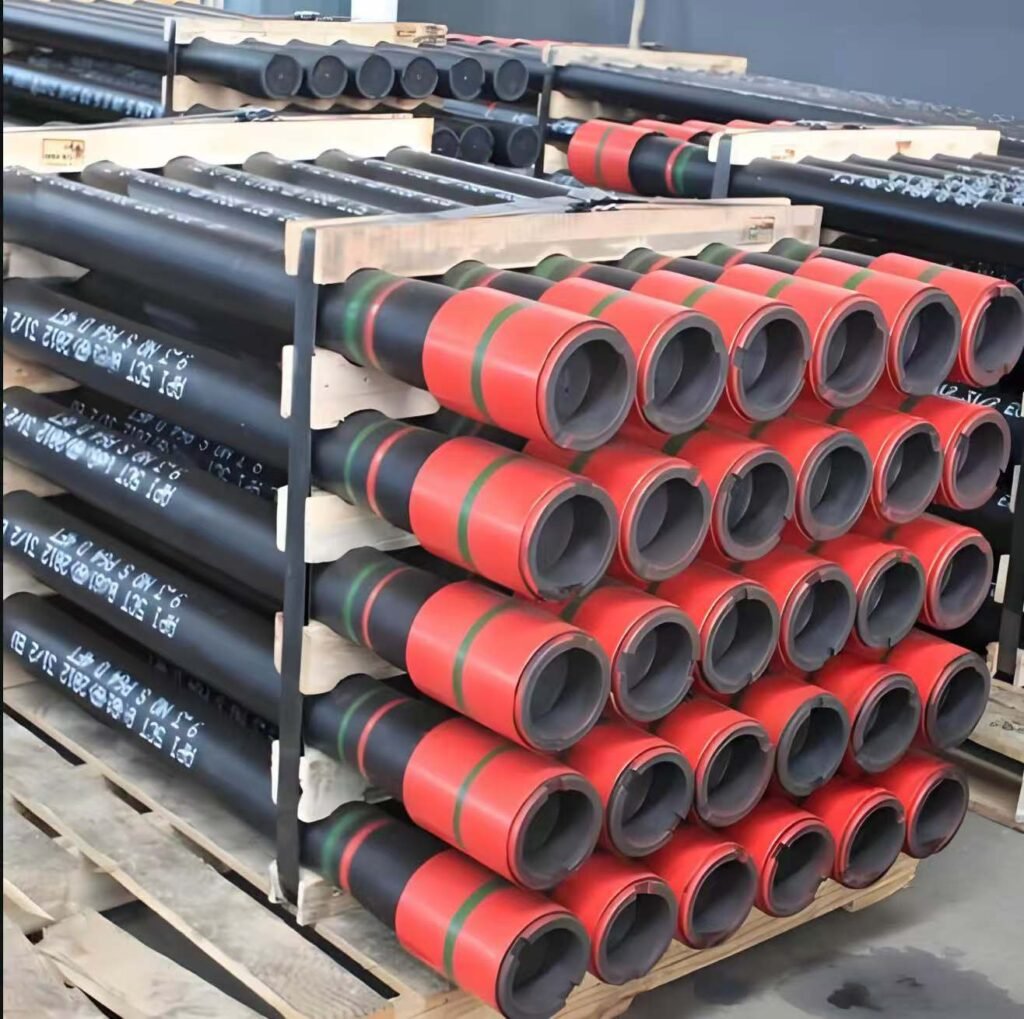
Imagine trying to drink a milkshake with a flimsy, cracked straw. It would be messy, inefficient, and probably fail. Now, imagine that “milkshake” is oil or gas buried thousands of meters underground under immense pressure and heat. The “straw” in this case needs to be incredibly strong, precise, and reliable. That’s exactly what OCTG is. OCTG stands for Oil Country Tubular Goods. These are the high-strength steel pipes used to construct oil and gas wells. They are the lifelines of the entire energy industry, forming the critical infrastructure from the surface to the petroleum reservoir deep below. Understanding the different Types of OCTG is key to understanding how modern energy exploration works. This article will guide you through the three main families of OCTG—casing, tubing, and drill pipe—explaining their unique jobs, the advanced materials they’re made from, and why choosing the right type is a matter of safety, efficiency, and environmental protection. Whether you’re new to the field or looking to solidify your knowledge, let’s explore the tubular backbone of energy production.
1. Defining the Backbone: What is OCTG?
OCTG isn’t just any pipe you might find at a hardware store. It is a family of precision-engineered, seamless steel pipes manufactured to extremely tough standards. Think of them as the structural skeleton and circulatory system of an oil or gas well. Every single well drilled on Earth, whether on land or offshore, relies on these tubular goods. Their primary purposes are to prevent the wellbore from collapsing, to isolate different underground layers (like freshwater aquifers from oil-bearing zones), and to provide a safe, sealed conduit for bringing hydrocarbons to the surface. The American Petroleum Institute (API) sets the global benchmark for OCTG dimensions, steel grades, threading, and testing. This standardization is crucial—it ensures that pipes from a manufacturer in Japan will connect perfectly and perform reliably with pipes from a mill in the United States, creating a safe and interoperable global industry.
2. The Protective Shell: Understanding Casing Pipe
Casing is the first line of defense in a well. It is large-diameter pipe that is cemented in place. Its main job is isolation and stabilization. Without casing, loose rock and sand would cave into the well, and fluids from different layers would mix uncontrollably.
A well is built in stages, like stacking telescoping pipes, each protected by a string of casing:
- Conductor Casing: The first and shortest string. It stabilizes the surface soil.
- Surface Casing: Protects freshwater aquifers. This is a critical environmental safeguard.
- Intermediate Casing: Isolates problematic zones, like high-pressure rock or unstable shale.
- Production Casing: The final string that runs to the total depth. It directly faces the reservoir.
Casing comes in various “grades,” which are codes like K-55, N-80, L-80, P-110, and Q-125. The number represents the minimum yield strength in thousands of pounds per square inch (psi). For example, L-80 pipe can handle at least 80,000 psi of pressure before it deforms. Choosing the correct grade is a balance of strength, cost, and resistance to corrosive elements in the well.
3. The Production Conduit: The Role of Tubing Pipe
Once the casing is set and the well is ready to produce, tubing is run inside the production casing. This is the pipe through which oil or gas actually flows to the surface. It’s smaller in diameter than casing and is usually retrievable for maintenance or replacement. Tubing is the workhorse of production. It must withstand constant flow, pressure changes, and often corrosive elements like saltwater, carbon dioxide (CO2), or hydrogen sulfide (H2S). Therefore, tubing grades (like L-80, C-90, T-95) are often chosen for their corrosion resistance. The connections between tubing joints are engineered for a perfect seal under high pressure and tension, as any leak here means lost product and potential safety hazards.
4. The Drilling Workhorse: Essentials of Drill Pipe
Drill pipe is the rotating element that makes drilling possible. It connects the drilling rig on the surface to the drill bit at the bottom of the hole. It has three tough jobs: transmit drilling torque to turn the bit, channel high-pressure drilling fluid to clean and cool the bit, and support its own immense weight for miles. A joint of drill pipe consists of the tube body and welded-on tool joints (thicker, threaded ends). The tube is often “upset”—forged thicker at the ends to handle the stress at the connections. Drill pipe is subject to incredible fatigue, bending, and wear. It is classified by API grades (D, E, X, G, S) based on strength and is carefully inspected and retired based on wear measurements to prevent costly failures downhole.
5. Material Science: The Steel Behind the Strength
The performance of OCTG starts at the steel mill. While standard carbon steel works for many applications, extreme well conditions demand advanced metallurgy.
- Carbon Steel: The most common, used for standard wells.
- Alloy Steel: Adds chromium, molybdenum, and nickel for increased strength and temperature resistance.
- Corrosion Resistant Alloys (CRA): High-end steels with high chromium and nickel content (e.g., 13Cr, Duplex, Inconel) for highly corrosive environments.
The strength is achieved through heat treatment. A common process is Quenching and Tempering (Q&T). The steel is heated, rapidly cooled (quenched) to create a very hard structure, then reheated (tempered) to reduce brittleness and achieve the perfect balance of strength and toughness for its API grade.
6. Threads That Hold: OCTG Connections Explained
The connection between two joints of pipe is a critical point of potential failure. There are two main types:
- API Threaded & Coupled (T&C): Standardized, reliable, and economical. They use a separate coupling to join two pipes and require a thread compound (“dope”) to seal.
- Premium Connections: Engineered, proprietary designs from companies like Vallourec or Tenaris. They feature advanced thread forms, metal-to-metal seals, and often integral joints. They are used for high-pressure/high-temperature (HPHT) wells, critical sour service, or offshore applications where leak-proof integrity is paramount. The seal in these connections is so precise it often does not require dope.
7. The OCTG Installation Journey: Running Pipe
“Running pipe” is the carefully choreographed process of assembling and lowering a string of OCTG into the well. The rig crew uses a giant hoist system to lift each joint from the pipe rack, screw it into the string hanging in the derrick, and lower it into the hole. Before running, every pipe is drift tested—a calibrated mandrel is passed through it to ensure the internal diameter is clear. Threads are cleaned, inspected, and coated with the correct compound. This process, repeated hundreds of times for a single well, requires immense skill and attention to detail, as a mistake can lead to a dropped string or a bad connection.
8. Corrosion: The Invisible Enemy of OCTG
Inside a well, steel is under constant attack. Sour corrosion from H2S can cause sudden cracking. Sweet corrosion from CO2 can slowly eat away at pipe walls. Chlorides in saltwater are also highly corrosive. Left unchecked, corrosion leads to leaks, spills, and well failures. The industry fights back with:
- Coatings: Internal plastic or epoxy linings.
- Inhibitors: Chemicals injected into the production stream.
- CRA Selection: Using inherently resistant alloys for the worst conditions.
- Monitoring: Regular inspections with tools that measure wall thickness from inside the pipe.
9. 10 Essential Tips for Selecting the Right OCTG
Choosing the correct OCTG is a complex engineering decision. Here are 10 key considerations:
- Know Your Well Plan: Depth, pressure, temperature, and trajectory define everything.
- Respect the Environment: Identify all corrosive elements (H2S, CO2, chlorides) in the geologic data.
- Match Grade to Load: Use engineering models to calculate required burst, collapse, and tensile strengths.
- Don’t Over-Specify: Higher grades cost more. Choose the most cost-effective grade that safely meets all requirements.
- Prioritize Connection Integrity: For critical wells, invest in premium connections. For standard wells, API T&C may suffice.
- Source from Reputable Mills: Ensure the manufacturer has API certification and a proven quality track record.
- Plan for Inspection: Factor in third-party inspection costs to verify dimensions, grade, and thread quality upon delivery.
- Consider Lifecycle Cost: A cheaper pipe that corrodes quickly is more expensive than a higher-grade CRA pipe that lasts decades.
- Consult Standards: The API Spec 5CT (Casing/Tubing) and Spec 5DP (Drill Pipe) are your essential rulebooks.
- Engage Experts Early: Work with experienced drilling engineers and tubular specialists during the well design phase.
10. Beyond Conventional: Specialized OCTG Applications
As the industry pushes into more extreme frontiers, OCTG technology evolves.
- Deepwater Wells: Require high-strength, thick-wall casing to handle enormous pressures and the tension of long, unsupported hangs.
- Sour Service: Demands specially controlled steel grades (like SSC-resistant L-80) with strict hardness limits to prevent sulfide stress cracking.
- Expandable Tubulars: A groundbreaking technology where pipe is run into the well and then mechanically expanded against the formation, creating a larger diameter wellbore at depth, which was previously impossible.
Types of OCTG
Understanding the distinct Types of OCTG—Casing, Tubing, and Drill Pipe—is fundamental. Each type has a specialized, non-interchangeable role in the well’s lifecycle. Casing is the structural, permanent foundation. Tubing is the replaceable production highway. Drill Pipe is the temporary drilling tool. Confusing them would be like using a foundation pillar as a water pipe—it might fit, but it would be dangerously inefficient and likely to fail. A successful well design meticulously specifies the exact size, grade, weight, and connection for each string of each type, creating a safe, efficient, and productive system from the reservoir to the storage tank.
FAQs on Types of OCTG
1. What is the basic difference between casing and tubing?
Casing is large-diameter, cemented permanently in place to line and seal the wellbore. Tubing is smaller-diameter, run inside the casing, and is removable; it’s the pipe through which oil and gas flow to the surface.
2. Why are there so many different steel grades (L-80, P-110, etc.)?
Different wells have different pressures and corrosive conditions. The grades indicate the pipe’s minimum yield strength and often its chemical treatment. A shallow, low-pressure well might use a lower-grade, cheaper pipe, while a deep, high-pressure well needs a much stronger grade.
3. What does “sour service” mean for OCTG?
“Sour service” refers to wells containing hydrogen sulfide (H2S). H2S can cause steel to become brittle and crack suddenly. OCTG for sour service is made from special steel with controlled hardness and enhanced resistance to this “sulfide stress cracking.”
4. Can drill pipe be reused?
Absolutely. Drill pipe is designed to be used over many different wells. Its condition is carefully monitored, and it is periodically inspected and retired when wear and tear reduce its strength below safe limits.
5. How is casing held in the well?
Casing is cemented in place. After the string is run, cement slurry is pumped down the inside and up the outside (annulus) between the casing and the rock wall. When it hardens, it permanently locks and seals the casing string.
6. What is a “premium connection” and why is it better?
Premium connections are advanced, often proprietary, threaded designs that offer superior sealing performance compared to standard API threads. They use precision-engineered metal-to-metal seals and are crucial for high-pressure, critical, or offshore wells where leak prevention is vital.
7. What happens if OCTG fails in a well?
Failure can range from a small leak requiring repair to a catastrophic “blowout” where uncontrolled pressure escapes. This can lead to environmental damage, loss of the well, and serious safety risks. This is why OCTG quality and selection are so critical.
8. Is all OCTG seamless, or is there welded pipe?
The vast majority of high-pressure OCTG (casing, tubing, drill pipe) is seamless, meaning it’s made from a solid steel cylinder pierced to form a pipe, ensuring uniform strength. Some large-diameter, low-pressure surface casing can be welded.
9. How do engineers decide what size OCTG to use?
They work from the bottom up. The desired production rate determines tubing size. That tubing must fit inside the production casing, which must fit inside the intermediate casing, and so on. This creates a “nesting” design of telescoping diameters.
10. What is “drift testing” and why is it done?
Drift testing involves passing a hardened steel cylinder of a specified diameter through every joint of OCTG before it’s run in the well. It ensures the pipe is not bent or dented and that tools can pass through it freely later during the well’s life.
Conclusion
The world of OCTG is a fascinating blend of heavy industry, precision engineering, and materials science. These unassuming steel pipes are the true unsung heroes of the global energy system, working silently under immense pressure and in hostile environments to deliver the resources that power our lives. From the robust casing that protects our groundwater to the high-tech tubing that brings energy to the surface, each type of OCTG plays a vital, specialized role. By understanding their functions, materials, and the careful science behind their selection, we gain a deeper appreciation for the engineering marvel that is a modern oil or gas well. It’s a field where safety, efficiency, and environmental stewardship are literally built into every joint of pipe, connecting the depths of the earth to the needs of the modern world.