
Selecting the right OCTG manufacturer is a decision that echoes through the entire lifecycle of an oil or gas well. This choice, quite frankly, sits at the heart of operational safety, economic viability, and long-term project success. Get it wrong, and you court a litany of troubles—from costly downtime and environmental hazards to catastrophic failures. Get it right, and you establish a foundation of unwavering reliability. This guide will illuminate the critical path to identifying a partner, not just a supplier, who can meet the extraordinary demands of the modern energy sector. Let’s delve into the key considerations that separate exceptional OCTG manufacturers from the merely adequate.
Understanding the Stakes: Why Your OCTG Manufacturer Matters
Before we even glance at a supplier list, we must appreciate the monumental role of OCTG—Oil Country Tubular Goods. These are not simple pipes; they are the well’s structural backbone, its conduit for hydrocarbons, and its primary barrier against uncontrolled pressure. They face a brutal environment: immense mechanical stresses, corrosive fluids, volatile pressures, and extreme temperatures. Consequently, the company that forges these components carries a profound responsibility. Your chosen OCTG manufacturer directly influences well integrity, environmental compliance, and the safety of personnel on-site. Think of it this way: skimping on this choice is akin to building a skyscraper with substandard steel—the risks are too grave to contemplate. A premium manufacturer invests in more than just metal; they invest in the advanced metallurgy, precision engineering, and rigorous quality assurance that translate into peace of mind. This foundational understanding frames every subsequent evaluation criterion.
Deciphering Certifications and Compliance Standards
Any reputable OCTG manufacturer will wear its certifications like badges of honor—and you must insist on seeing them. These are not bureaucratic checkboxes but independent validations of a company’s commitment to excellence. The bedrock standard is the American Petroleum Institute (API) specification, particularly API 5CT for casing and tubing. However, a truly distinguished supplier goes beyond the baseline. Look for full accreditation to ISO 9001 for quality management systems, demonstrating a systemic approach to consistency. For operations in sour environments, adherence to ISO 15156 (NACE MR0175) for sulfide stress cracking resistance is non-negotiable. Furthermore, many leading manufacturers pursue additional, stringent regional or operator-specific qualifications. Don’t just accept certificates at face value; understand what they cover. Ask for audit reports and traceability documentation. A transparent manufacturer will readily provide this evidence, proving their processes are not just claimed but verified by authoritative third parties. This layer of scrutiny is your first, best filter.
Evaluating Manufacturing Capabilities and Technological Prowess
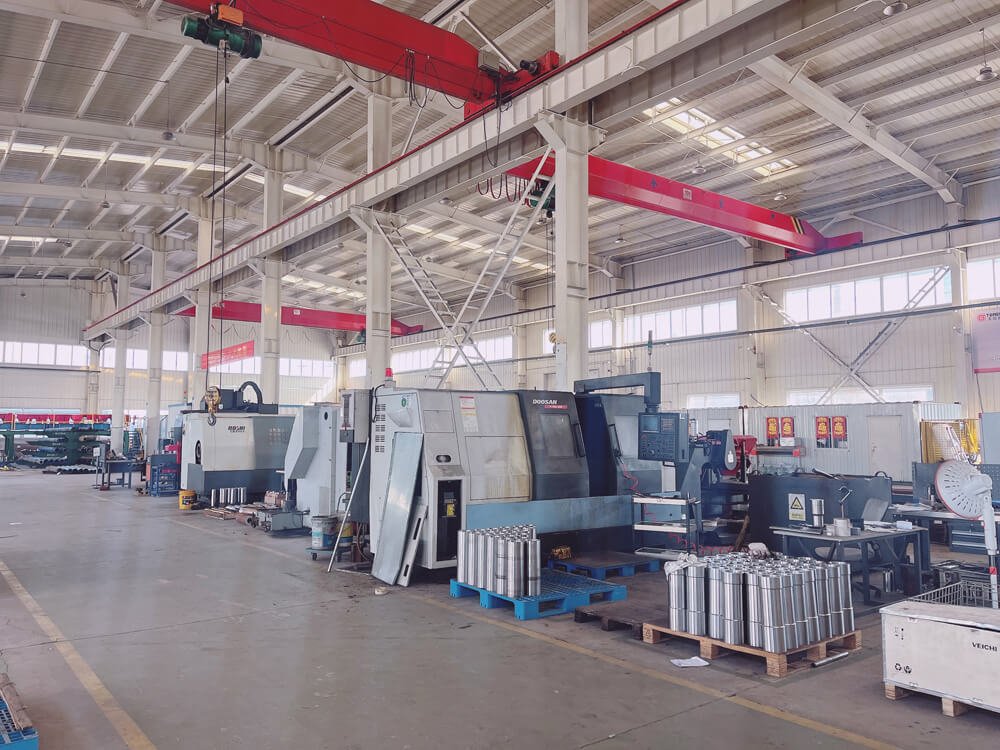
What happens inside the mill defines the product that arrives at your rig site. Therefore, a deep dive into a manufacturer’s capabilities is essential. Modern OCTG production is a symphony of advanced technology. Inquire about their steelmaking process: do they control the melt chemistry from scrap or raw materials? Electric arc furnaces with ladle refinement offer superior control over purity and alloy composition. Examine their pipe forming and seam welding techniques. For example, seamless pipe produced via rotary piercing or mandrel mills often exhibits superior homogeneity in high-stress applications. Meanwhile, advanced welded pipes using High-Frequency Induction (HFI) or Laser welding can offer excellent consistency and cost-effectiveness for certain specs. Crucially, assess their heat treatment facilities—normalizing, quenching, and tempering are vital for achieving the required mechanical properties. A forward-thinking OCTG manufacturer will also invest in non-destructive testing (NDT) technologies: automated ultrasonic testing, electromagnetic inspection, and hydrostatic testing are minimums. The presence of cutting-edge technology like phased array ultrasonics or real-time wall thickness monitoring speaks volumes about their dedication to defect-free products.
The Critical Role of Quality Assurance and Testing Protocols
Paper certifications and shiny machinery mean little without an ingrained, relentless quality culture. The difference between a good and a great OCTG manufacturer often lies in the rigor of their QA/QC protocols. This goes far beyond final inspection; it’s a philosophy woven into every step. A robust system ensures traceability from the heat of steel to the final pipe, allowing any potential issue to be pinpointed and contained. You should look for a comprehensive testing regimen that includes:
- Chemical Analysis: Spectrometry for precise alloy verification.
- Mechanical Testing: Tensile, yield strength, hardness, and Charpy impact tests to confirm performance under load and temperature.
- Dimensional Checks: Stringent verification of outer diameter, wall thickness, weight, and drift to ensure perfect running and threading.
- Non-Destructive Evaluation (NDE): As mentioned, advanced UT, EM, and visual inspection to detect hidden imperfections.
- Hydrostatic Testing: Pressurizing every length of pipe to a level above its rated capacity to prove its pressure integrity.
Ask potential partners for their Quality Manual and their typical test records. A manufacturer confident in its processes will be transparent, often allowing key clients to witness testing firsthand or review real-time data from the mill floor.
Analyzing Product Range and Specialization
The oilfield is not a monolith. Needs vary dramatically between a shallow, low-pressure onshore well and a deepwater, high-pressure/high-temperature (HPHT) subsea completion. Therefore, the breadth and depth of a manufacturer’s portfolio are telling. Some mills are jack-of-all-trades, while others cultivate deep expertise in specific niches. Your project requirements should guide you. Do you need standard API L80 or K55? Most can supply it. But what about proprietary, enhanced corrosion-resistant alloys (CRA) like 13Cr, Super 13Cr, or duplex steels for aggressive sour service? Or specially designed connections—gas-tight, high-compression, fatigue-resistant—for challenging wells? A manufacturer with a strong R&D department and the ability to produce both seamless and welded products across a wide range of sizes and grades offers valuable flexibility. However, sometimes a specialist with a flawless reputation in a specific product line, like ultra-high-strength sour service tubing, is the wiser choice for a technically demanding application.
Assessing Supply Chain Reliability and Logistics
In our industry, time is money, and delays can cascade into millions in lost revenue. An OCTG manufacturer’s reliability isn’t just about making quality pipe; it’s about delivering it to the right place, at the right time, in perfect condition. Scrutinize their logistical network and supply chain resilience. Do they own or control their raw material sources, mitigating price and availability volatility? What is their historical on-time delivery performance? Can they handle complex international shipping, customs, and delivery to remote locations? Furthermore, examine their pipe finishing, threading, and coupling capabilities. The ability to provide ready-to-run pup joints, end-finish according to your specified connection, and apply protective coatings or dopes is a significant value-add. A manufacturer with strategically located stocking points or threading facilities can be a lifesaver during unexpected field delays or urgent operational changes.
The Value of Technical Support and After-Sales Service
The relationship with your OCTG manufacturer should not end when the pipe leaves their dock. In fact, the most valuable partnerships are defined by what happens afterward. Exceptional technical support is a hallmark of a top-tier supplier. This includes having accessible engineers who can advise on product selection, running procedures, and compatibility with downhole conditions. Will they provide field service representatives to supervise critical running operations or troubleshoot an issue on-site? Do they offer comprehensive failure analysis (FA) services if a problem occurs, turning an incident into a learning opportunity? A manufacturer that stands behind its product with robust warranty terms and a proactive, problem-solving attitude is investing in a long-term partnership. This level of support reduces your operational risk and demonstrates a shared commitment to the success of your well.
Weighing Cost Against Total Value of Ownership
Let’s address the elephant in the room: cost. It is a pivotal factor, but it must be evaluated through the lens of Total Value of Ownership (TVO), not just initial purchase price. The cheapest pipe can become astronomically expensive if it leads to a fishing job, a well integrity failure, or a catastrophic leak. Conversely, a premium product from a trusted OCTG manufacturer may carry a higher upfront cost but pays dividends over the well’s entire life through unwavering reliability. When comparing quotes, factor in:
- Product Lifecycle: Reduced failure rates and longer service life.
- Operational Efficiency: Pipe that runs smoothly, connects perfectly, and requires minimal intervention.
- Risk Mitigation: The avoided costs of non-productive time, environmental remediation, and liability.
- Inventory Costs: Higher-quality, reliable pipe may reduce the need for excessive safety stock.
A true partner will help you conduct this analysis, proving that their value proposition justifies the investment. They focus on cost per successful barrel produced, not just cost per foot of pipe.
Building a Partnership with Your OCTG Manufacturer
Ultimately, selecting the right OCTG manufacturer is about forging a strategic partnership. You are entrusting them with a critical component of your most valuable assets. Look for a company whose corporate values align with yours—prioritizing safety, innovation, and integrity. Review their track record: how long have they been in business? What is their reputation among peers? Can they provide references from operators with similar project profiles? Schedule a visit to their facilities if possible; seeing the operation, meeting the team, and feeling the culture firsthand is invaluable. A collaborative partner will seek to understand your challenges and work with you to develop solutions, perhaps even co-engineering products for specific field applications. This symbiotic relationship fosters innovation and creates a resilient supply chain for the future.
Conclusion: Making an Informed Decision for Long-Term Success
Choosing the right OCTG manufacturer is a multifaceted, critical process that demands diligence, technical understanding, and a long-term perspective. It requires looking beyond glossy brochures and price tags to evaluate the tangible and intangible factors that define excellence. By systematically assessing certifications, technological capability, quality ethos, product suitability, logistical strength, and post-sale support, you can narrow the field to truly qualified partners. Remember, you are not just buying pipe; you are investing in the very integrity of your well and the safety of your operations. The optimal choice balances proven performance with a collaborative spirit, delivering not just a product but confidence. In the high-stakes world of oil and gas, that confidence is the most valuable commodity of all.
Frequently Asked Questions
What are the most important API specifications for OCTG?
The cornerstone specification is API 5CT, which covers steel grades, dimensions, tolerances, and testing for casing and tubing. For connections, API 5B specifies threading, gauging, and inspection. However, many premium connections and applications operate beyond API standards, requiring manufacturer-specific qualifications.
How can I verify the quality of OCTG before it arrives on site?
Request and review the Mill Test Certificate (MTC) or Material Test Report (MTR) for each heat and pipe. This document provides traceability and records all chemical and mechanical test results. For critical applications, consider engaging a third-party inspection agency to witness testing at the mill or conduct independent verification upon receipt.
What is the difference between seamless and welded OCTG, and how do I choose?
Seamless pipe is formed from a solid billet, offering uniform strength around its circumference and is traditionally preferred for high-pressure, critical applications. Welded pipe, made from coiled steel plate with a fused seam, offers excellent dimensional consistency and can be more cost-effective. Modern HFI welded pipe has closed the quality gap significantly, and the choice depends on the specific well design, cost targets, and manufacturer capability.
Why is traceability so critical in OCTG manufacturing?
Complete traceability allows every component to be linked back to its original steel heat and production batch. In the event of a failure or recall, this enables precise identification of affected materials, preventing broader operational issues and facilitating root cause analysis. It is a fundamental aspect of quality control and risk management.
How does a manufacturer’s location impact my procurement decision?
Location influences logistics lead times, shipping costs, import duties, and carbon footprint. A geographically closer manufacturer may offer faster, cheaper delivery and easier technical collaboration. However, a distant manufacturer with superior technical capability or pricing for a specialized product may still offer better total value. Diversifying your supply chain across regions can also mitigate geopolitical or logistical risks.
What questions should I ask a potential manufacturer about corrosion resistance?
Inquire about their experience with Corrosion-Resistant Alloys (CRA) like 13Cr, duplex, and super duplex steels. Ask for documented performance data in environments similar to yours (e.g., specific CO2, H2S, and chloride levels). Discuss their testing for sulfide stress cracking (SSC) and stress corrosion cracking (SCC) per NACE/ISO standards, and request case histories from fields with known corrosion challenges.
Suggestions for Links:
- American Petroleum Institute (API) – www.api.org
- International Organization for Standardization (ISO) – www.iso.org
- NACE International (The Corrosion Society) – www.nace.org
- U.S. Energy Information Administration (EIA) – www.eia.gov